


If you need a car accident lawyer right now, here’s the short version: look for someone who handles car accident cases every week, not occasionally, who has actual trial experience (even if your case never goes to trial), who explains fees in writing before you sign anything, and who you can reach on the phone within a day or two of calling. Everything else is detail work.
That detail work matters, though. A bad hire here doesn’t just waste your time. It can cost you tens of thousands of dollars on a settlement that should have been worth far more, or leave you stuck with a firm that treats your case like a file number instead of a person recovering from a wreck.
I’ve watched people pick lawyers off a billboard, sign paperwork on the spot, and regret it three months later when nobody returns their calls. I’ve also watched people spend two extra weeks vetting attorneys and end up with a settlement that covered years of physical therapy instead of a few months. The difference usually comes down to a handful of specific things people don’t think to check.
Why This Decision Carries More Weight Than People Expect
Most people have never hired a lawyer before. They assume one personal injury attorney is roughly as good as another, since they all advertise similar promises: no fee unless we win, free consultation, maximum compensation.
That’s marketing language. It tells you almost nothing about how a firm actually operates.
Two lawyers can both work on contingency and both offer free consultations, and still produce wildly different outcomes for the same accident. One might settle your case in six weeks for the insurance company’s first offer. Another might spend four months building medical documentation, negotiate twice, and get you three times as much. The paperwork looks identical from the outside. The results don’t.
The Insurance Information Institute has noted that most auto insurers train adjusters specifically to identify claimants without legal representation and settle those claims faster and for less. That’s not an accusation against any particular company, it’s just how claims departments are structured. An adjuster’s job includes managing payout costs, and an unrepresented claimant is an easier conversation than one backed by a lawyer who knows medical billing codes and comparative fault rules.
So the lawyer you choose isn’t just handling paperwork. They’re the person negotiating against someone whose job is to minimize what you get.
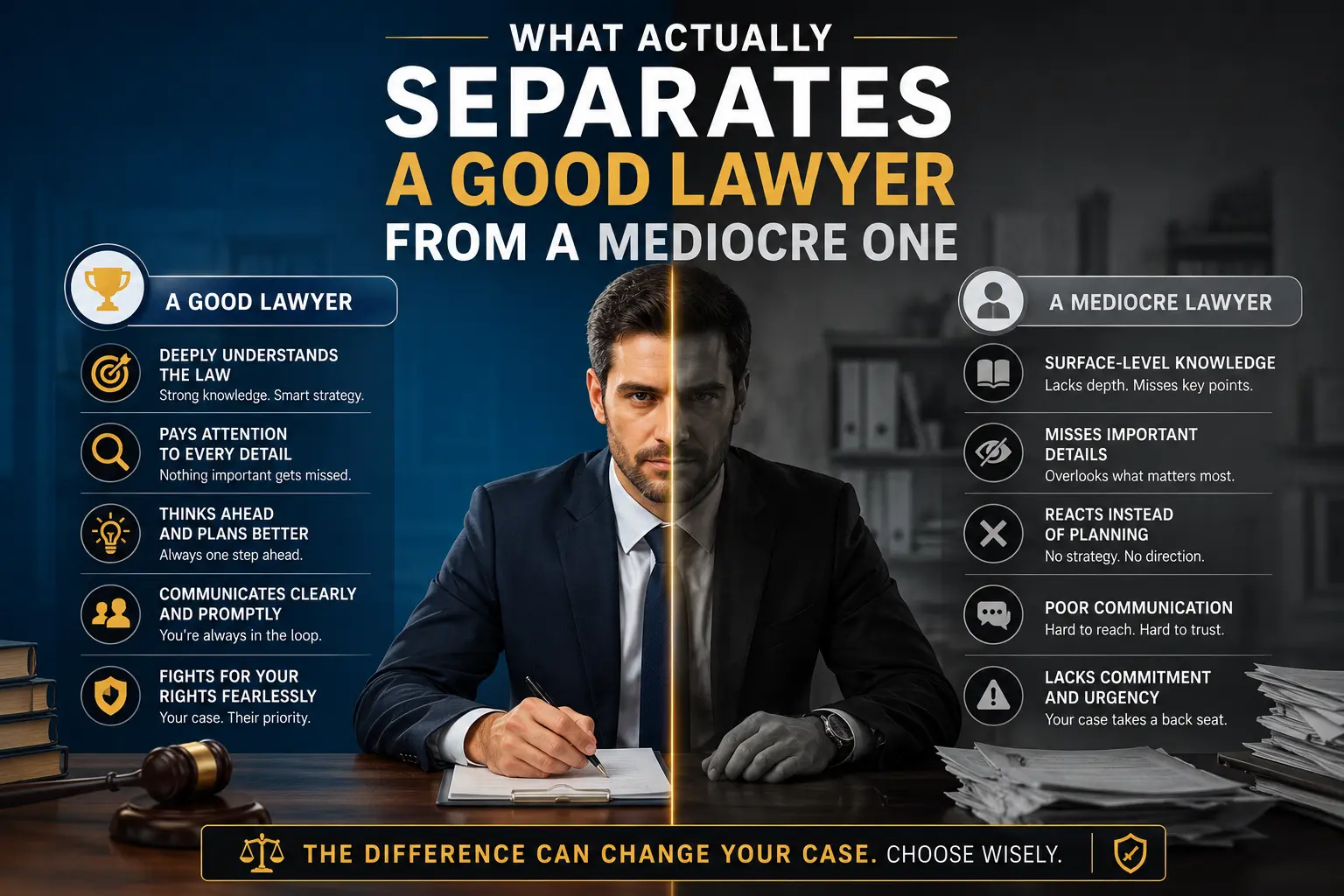
What Actually Separates a Good Lawyer From a Mediocre One
Trial Experience, Even If You Never Go to Trial
Here’s something most people don’t realize: somewhere around 95% of personal injury claims settle before reaching a courtroom. Given that, it’s tempting to think trial experience doesn’t matter much.
It matters more than almost anything else, and here’s why. Insurance companies keep informal notes on which firms actually file lawsuits and go the distance versus which ones settle every case at the first reasonable offer. Adjusters negotiate differently depending on which type of lawyer they’re across the table from.
A firm known for taking cases to trial gets treated with more caution. Their settlement offers tend to start higher and improve faster during negotiation, simply because the insurer knows a lowball offer might end up costing them a jury verdict and legal fees down the road. A firm known as a “settlement mill,” meaning they push volume and rarely litigate, often gets lower opening offers because insurers know they’re unlikely to push back hard.
Ask directly: “How many car accident cases have you taken to trial in the last three years?” A lawyer with zero trial experience isn’t automatically bad, but you should know that going in, and you should ask how they handle cases where the insurer refuses a fair settlement.
Specific Experience With Cases Like Yours
Car accidents aren’t uniform. A rear-end collision at a stoplight with clear liability is a completely different animal than a multi-vehicle pileup on a highway, a T-bone at an intersection with disputed fault, or a crash involving a commercial vehicle.
Commercial vehicle cases in particular, things like accidents involving delivery trucks, rideshare drivers, or buses, involve different insurance layers, different regulatory bodies, and often multiple defendants. If your accident involved a bus or a commercial carrier, the case gets more complicated fast, and you want someone who’s actually handled that specific type of claim before. Ojas247 has covered this in more depth in its piece on what to do after being hit by a bus and how a bus accident lawyer handles those claims, which walks through why those cases often involve government entities, transit authorities, or corporate fleet insurers instead of a single individual policy.
Ask a potential lawyer how many cases similar to yours they’ve handled in the past two years, and ask what made those cases resolve the way they did. A vague answer is a warning sign. A specific answer, with details about injury type, insurer, and outcome, tells you they’re speaking from real casework.
Case Results That Actually Match Your Situation
Every firm’s website has a results page with big settlement numbers. Those numbers are real, usually, but they’re often the outliers, not the average.
Ask instead: “What’s a typical settlement range for a case with my type of injury and these circumstances?” A lawyer with genuine experience can give you a realistic range on the spot, based on medical bills, lost wages, and comparable local verdicts. Someone who can only quote their biggest headline settlement, without context for your case, is telling you they don’t have a deep bench of comparable outcomes.
How Fees Actually Work (Read the Fine Print)
Almost every car accident lawyer works on contingency, meaning you pay nothing upfront and they take a percentage of your settlement or verdict if they win. That percentage typically runs between 33% and 40%, and it usually increases if the case goes to litigation versus settling early.
That structure sounds simple, but the details inside it vary a lot between firms:
- Does the percentage change if the case settles before a lawsuit is filed versus after?
- Are case costs (expert witnesses, medical record requests, court filing fees) deducted from your share before or after the attorney’s percentage is calculated?
- What happens to those costs if you lose the case? Some firms absorb them; others bill the client regardless of outcome.
- Is there a separate fee if the case goes to appeal?
Get this in writing before you sign anything. The American Bar Association’s consumer guidance on hiring an attorney specifically recommends getting a written fee agreement that spells out percentage tiers and cost responsibility, rather than relying on a verbal explanation during your first meeting. Verbal promises about fees have a way of shifting once you’re several months into a case.
Questions Worth Asking in the First Consultation
Most firms offer a free initial consultation, and most people spend it listening rather than asking. Flip that. This is your one chance to evaluate the person before you’re contractually tied to them.
Worth asking directly:
- Who will actually handle my case day to day? At larger firms, the attorney who does your intake meeting often isn’t the one working your file. You might be assigned to a paralegal or a junior associate you’ve never met.
- How often will I get updates, and through what method? Email, phone calls, a client portal? Get specifics, not “we’ll keep you posted.”
- What’s your current caseload? A lawyer juggling 200 active cases can’t give yours the attention a lawyer with 40 active cases can.
- Have you handled a case against this specific insurance company before? Adjusters and defense counsel vary by insurer, and familiarity helps.
- What’s your honest assessment of my case’s weaknesses? A lawyer who only tells you good news in the first meeting is selling, not advising.
Pay attention to how they answer, not just what they say. A rushed, generic response to a direct question is a preview of how communication will go for the next several months.
Red Flags That Should Make You Walk Away
Some warning signs show up before you even sit down for a consultation.
Pressure to sign immediately is one. A legitimate lawyer wants you to feel confident in the decision, not rushed into it. If someone pushes you to sign a retainer agreement on the first call before you’ve had time to think it over or talk to family, that’s worth noticing.
Guarantees about outcome are another. No ethical lawyer can promise a specific settlement amount before reviewing your medical records, police report, and insurance details. “We’ll get you six figures” as an opening line, before they’ve seen any documentation, is a sales pitch, not a legal assessment.
Difficulty reaching anyone before you’ve signed is a preview of what happens after. If it takes three days and five calls just to schedule a free consultation, imagine what it’s like trying to get an update on your case eight weeks in.
Also watch for firms that seem to be mass-processing cases, where the same generic settlement demand letter template gets used regardless of your specific injuries or circumstances. You can sometimes spot this if the intake questions feel scripted and generic rather than specific to your accident.
Local Knowledge Is an Underrated Advantage
A lawyer licensed in your state but based somewhere else, or one who primarily practices in a different area of the same state, can still represent you competently. But local knowledge tends to speed things up and sometimes changes outcomes.
Local attorneys usually know which judges in the county tend to favor plaintiffs on comparative negligence questions, which claims adjusters at regional insurance offices are reasonable versus difficult, and which local hospitals and specialists provide documentation that holds up well in negotiations. They also tend to know the specific traffic patterns and intersection histories that come up again and again in local accident claims.
If your accident happened somewhere unusual, involving a commercial vehicle or municipal entity, this local knowledge becomes even more valuable, since those cases often involve navigating claims against a transit authority, city government, or trucking company with its own legal department, rather than a single driver’s personal auto policy.
Settlement Mills vs. Firms Built to Fight
There’s a category of personal injury practice sometimes called a “settlement mill.” These firms advertise heavily, sign a high volume of clients, and settle the vast majority of cases quickly for whatever the insurance company offers in the first round. It’s a legitimate business model, and it works fine for straightforward, low-injury cases where a fast payout genuinely serves the client.
It works badly for anyone with significant injuries, long-term medical needs, or disputed liability. In those situations, you want a firm structured to actually litigate if negotiations stall, with the staff, investigators, and financial capacity to front the costs of expert witnesses and depose the other side.
One way to spot the difference during your consultation: ask how the firm decides when to file a lawsuit versus continue negotiating. A settlement mill often gives a vague answer or implies they “always try to settle first,” without a clear threshold for when they’d escalate. A litigation-ready firm usually has a specific process, often involving a case value assessment against the highest offer received, with a clear point at which they recommend filing suit.
What to Bring to Your First Meeting
Show up prepared and you’ll get a far more useful consultation:
- The police report, if one was filed
- Photos from the accident scene, including vehicle damage and any visible injuries
- Contact and insurance information for the other driver
- Medical records or at least a list of providers you’ve seen so far
- Any correspondence you’ve already had with an insurance adjuster
- A written timeline of events, since memory fades faster than people expect, especially after a stressful event
A lawyer who reviews actual documentation during the consultation, rather than just listening to your verbal account, gives you a far more accurate read on your case’s strength.
Mistakes People Make Most Often
Waiting too long to consult a lawyer is common. Many states have a statute of limitations of two to three years for personal injury claims, but evidence degrades fast. Witness memories fade, security camera footage gets overwritten, and vehicle damage gets repaired before it’s documented. The sooner you talk to someone, even if you’re not sure you’ll hire them, the better your evidence position stays.
Choosing based on advertising alone is another common misstep. Billboard presence and a catchy jingle correlate with marketing budget, not legal skill. Some excellent attorneys barely advertise because their business runs on referrals.
Accepting the first settlement offer without legal review is a mistake that costs people real money. Insurance companies often make an initial offer within days of a claim, timed deliberately before the claimant has a full picture of their medical costs or lost income. Once you accept and sign a release, that case is closed permanently, even if it turns out your injury needed six more months of treatment.
Not asking about staffing is another one. If a large firm’s TV ads all feature one recognizable attorney, but your case actually gets assigned to a rotating team of associates you never speak with directly, you may not find that out until you’re already a client.
How Long the Process Typically Takes
Simple cases with clear liability and modest injuries sometimes resolve in two to four months. Cases involving surgery, long-term treatment, or disputed fault often take six months to over a year, particularly if a lawsuit gets filed and the case moves through discovery.
A lawyer who promises a fast resolution before reviewing your medical situation is either overly optimistic or not being fully straight with you. The honest answer, almost always, is “it depends on how your treatment progresses and how the insurer responds,” followed by a realistic range based on similar past cases.
Final Thoughts
Choosing a car accident lawyer comes down to a short list of concrete checks: real experience with cases like yours, a track record that includes actual litigation when negotiations stall, a fee agreement in writing before you sign, and direct, specific answers during your first meeting rather than reassuring generalities.
Take the free consultation seriously. Bring documentation, ask pointed questions, and pay attention to how quickly and clearly they respond, since that’s a preview of the next several months of communication. The right lawyer for a straightforward fender bender might not be the right one for a case involving a commercial vehicle or long-term injury, so match the attorney’s actual experience to your specific circumstances rather than picking based on the biggest billboard in town.
This guide is brought to you by Ojas247, where we cover practical, real-world guidance on personal injury claims and finding the right legal representation after an accident.